What's included
Every aspect of bottom work,
carried out properly.
We don't offer a single packaged 'antifoul service'. We assess each hull individually and carry out exactly what it needs — nothing more, nothing less.
High-pressure hull wash
Full pressure wash immediately after lift, before the hull dries. Growth pattern and fouling density tell us a lot about how the existing antifouling is performing and what condition we should expect beneath it.
Condition assessment
Visual and tactile inspection of the full underwater surface: osmotic blistering, GRP delamination, gelcoat crazing, waterline damage, and through-hull fitting condition. You receive a written assessment before any work is agreed.
Osmosis treatment
Where osmotic blistering is found, we open, dry, and treat properly. We don't fill over blisters. Depending on severity: blister grinding, extended drying time, and multi-coat epoxy barrier application. The cure is only as good as the preparation.
GRP & fibreglass repair
Structural and cosmetic repair of fibreglass hulls — crack filling, delamination repair, gelcoat matching for waterline chips and scuffs. Work is finished to blend, not patched to hide.
Antifouling application
Product selection matched to your use pattern — fast-release for high mileage, controlled-release for berth-based boats. Applied at correct film thickness with proper coverage, overlap, and boot-top masking. Not rushed.
Full hull respray
For cosmetic refinishing above the waterline — including full topcoat respray to factory standard. Primed, faired, and finished with two-part polyurethane. Colour-matched to original specification or a new colour of your choice.
How we work
The process, from lift to launch.
Every job follows the same sequence. No steps skipped, no shortcuts taken to hit an arbitrary date.
-
01
Lift & immediate wash
We want to see the growth pattern before it dries out and tells us nothing. Pressure washing immediately after lift shows us exactly what the antifouling has been doing — and what we're working with underneath.
-
02
Condition report
You receive a written report of hull condition before any work is agreed. If we find osmosis, cracking, or anything unexpected, we document it with photographs and discuss the options with you directly. No surprises at invoice time.
-
03
Preparation
Sanding, grinding, fairing, or osmosis treatment as required by the condition report. This is the stage that determines the quality of everything that follows. We don't rush it.
-
04
Priming & barrier coat
Epoxy primer and, where required, a full barrier coat system applied over the prepared surface. Number of coats is determined by condition — not by a standard package.
-
05
Antifouling application
Correct product at correct film thickness. Boot-top masked and finished cleanly. Waterline level checked and corrected if it has shifted over previous seasons.
-
06
Launch prep & inspection
Anodes inspected and replaced as needed. Through-hull fittings greased. Pre-launch inspection completed and signed off. The boat goes back in the water ready to sail, not needing another visit.
From the yard
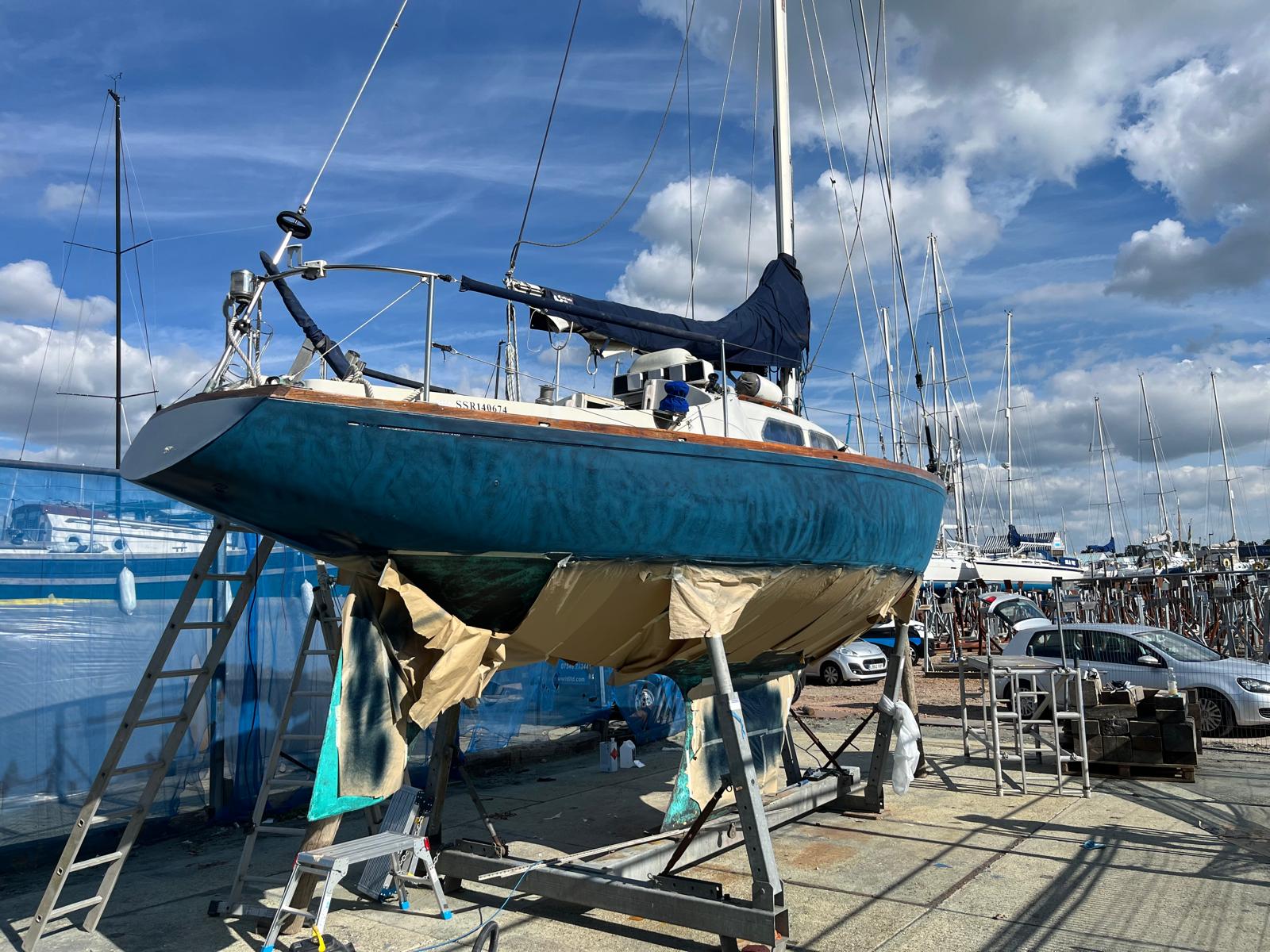
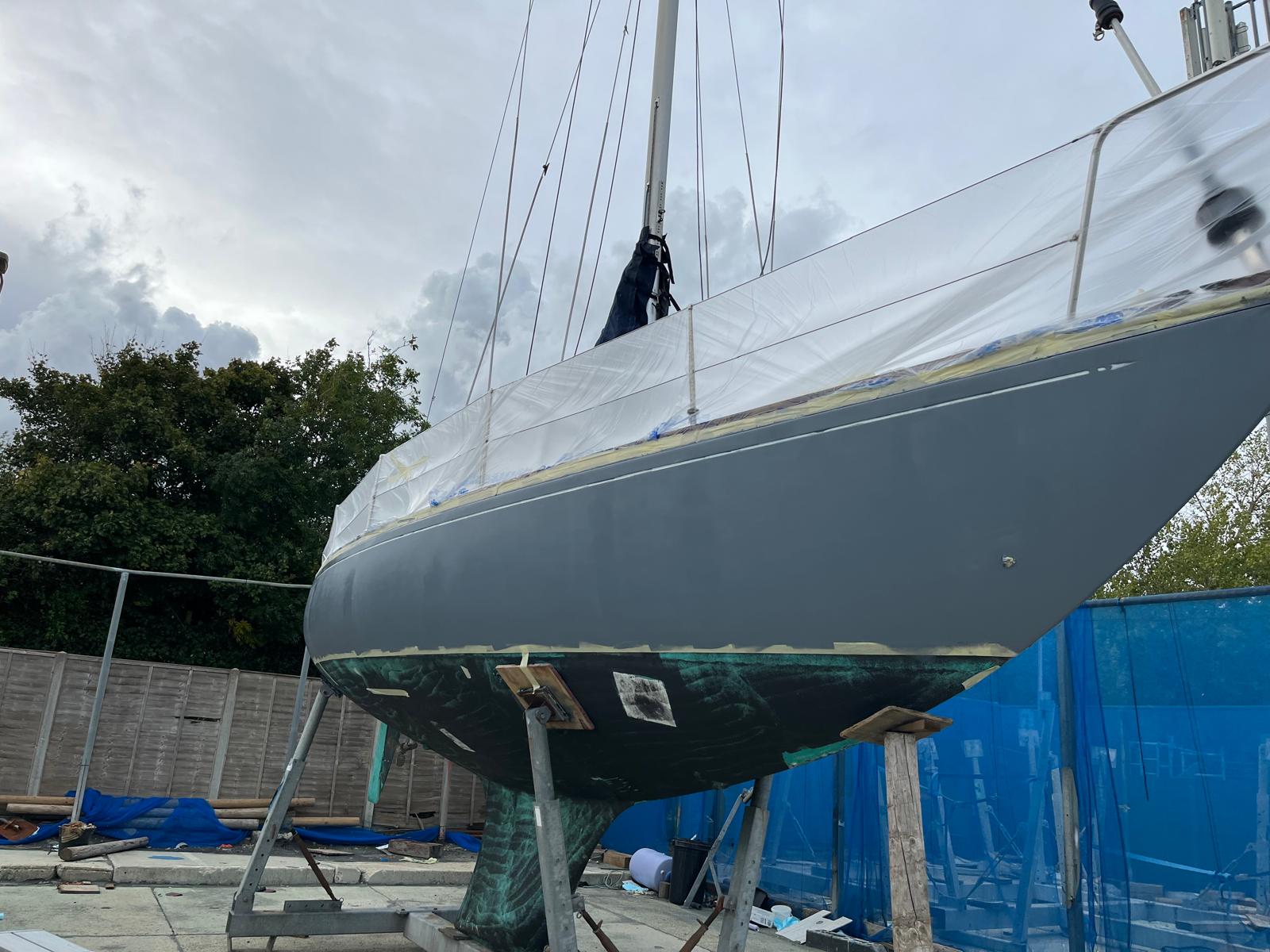
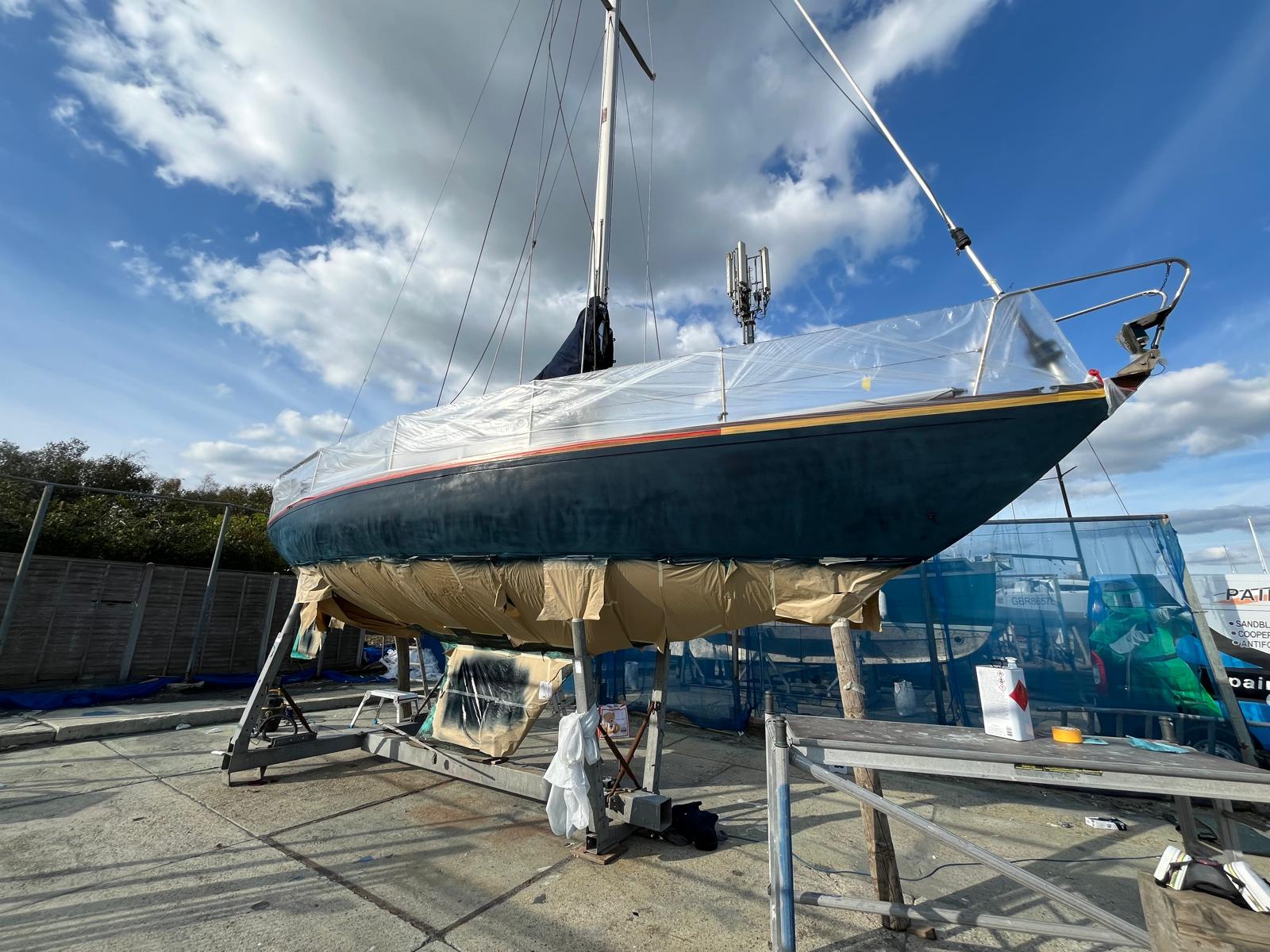
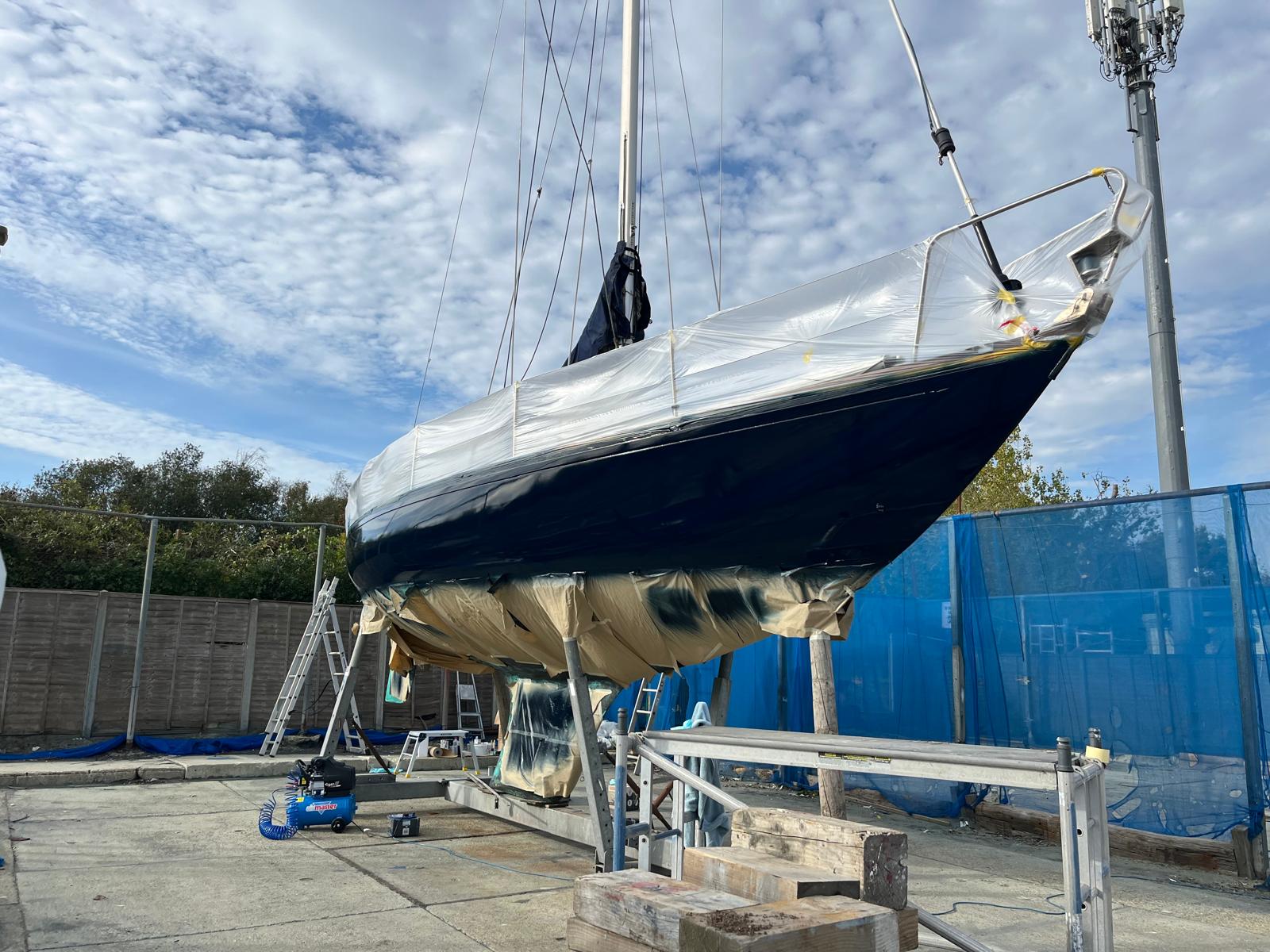
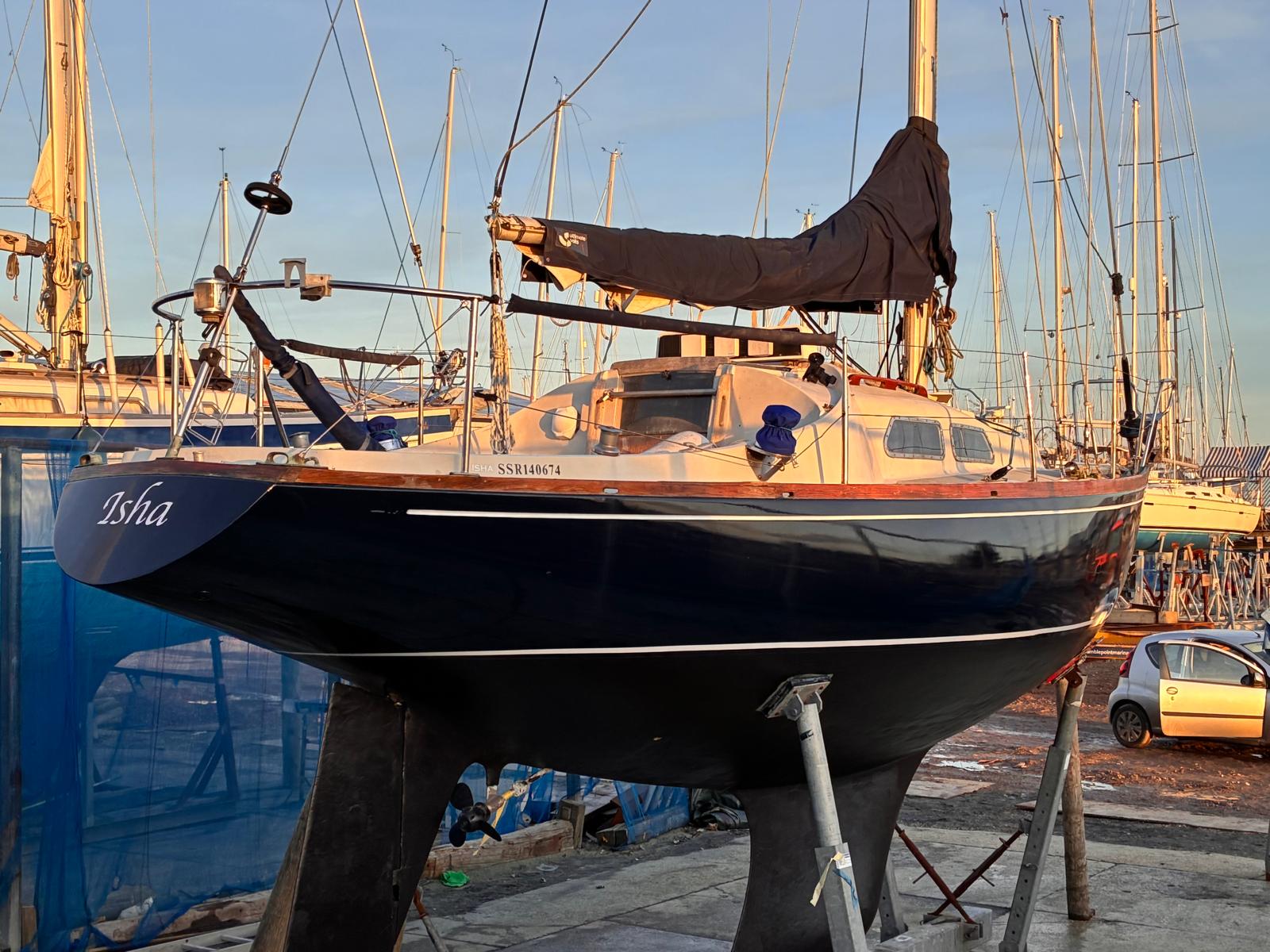
Isha — Full Hull Respray
A complete hull respray from bare gelcoat to finished gloss: sanded, primed, painted, and polished. A typical example of the standard we work to.
Common questions
Hull & antifouling — what owners ask.
How often should I antifoul?
Most boats in inshore UK waters benefit from an annual antifouling — typically lifted each autumn or spring. If you're leaving the boat in the water over winter, or sailing more than 1,500 miles in a season, some products may need a second coat mid-season. We advise based on your specific use pattern and hull condition.
What is osmosis, and how do I know if my boat has it?
Osmosis occurs when water penetrates the outer gelcoat and reacts with the fibreglass laminate beneath, forming blisters filled with acidic fluid. Small isolated blisters are common and manageable. Extensive delamination — where large areas of the laminate have separated — is more serious. We assess this during the initial inspection, and you won't be quoted for treatment you don't need.
Can you match my existing hull colour for a repair or partial respray?
Yes. We work from RAL and manufacturer paint codes for topcoat matching. For an older hull where the original paint has faded, we sometimes recommend a full topcoat refresh — it's often a better result than trying to match aged paint with fresh material.
How long does a full hull respray take?
Depending on vessel size and preparation required, a full respray typically takes 2–4 weeks in the yard. We give you a realistic timeline at the outset and we won't rush the prep to hit an arbitrary date — preparation is where quality is made or lost.
Do you work on boats already in the water, or only on the hard?
Hull and antifouling work requires the boat on the hard. We can coordinate lifting and storage with the local yard, or work on boats you have already arranged to be lifted. Topside and deck repairs can be carried out afloat in settled conditions.